

Why ADAS Calibration Is Important After a Collision
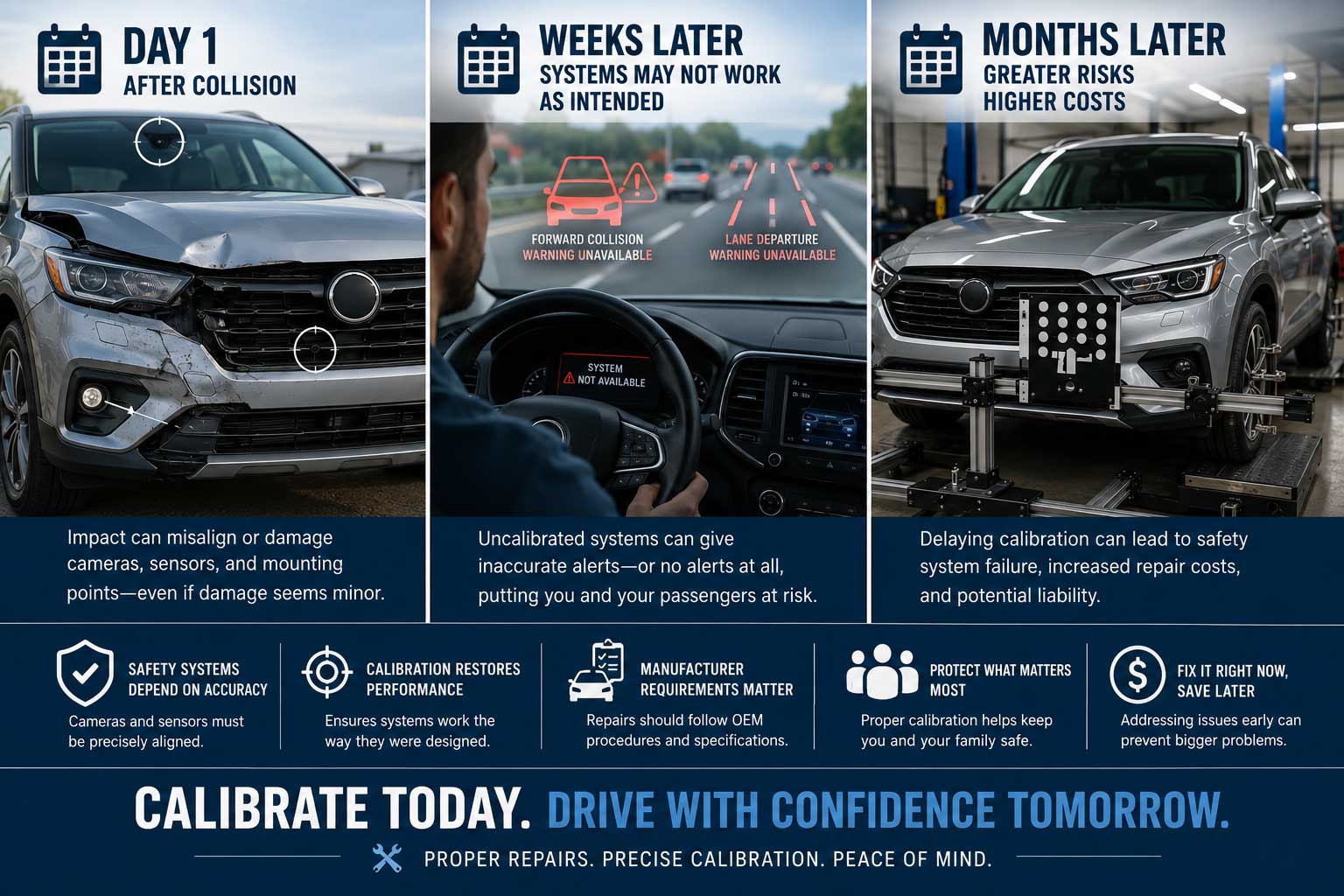
Modern vehicles are equipped with more advanced safety technology than ever before. Features such as forward collision warning, automatic emergency braking, lane departure warning, blind spot monitoring, adaptive cruise control, parking sensors, and backup cameras all help drivers stay safer on the road. That is why ADAS calibration after a collision can be an important part of the repair process. These systems are part of what is known as Advanced Driver Assistance Systems, or ADAS. After a collision, many drivers focus on visible damage such as dents, broken bumpers, scratched paint, or damaged glass. However, damage to a vehicle’s cameras, sensors, mounting locations, or structural components can also affect how certain safety systems operate.
What Is ADAS Calibration?
ADAS systems rely on cameras, radar, sensors, and other components to monitor the area around your vehicle. These components must be positioned and calibrated correctly to provide accurate information. ADAS calibration is the process of checking and adjusting these systems according to the vehicle manufacturer’s specifications when required. Depending on the vehicle and the repairs performed, calibration may be necessary after damage or repairs involving certain areas of the vehicle, including the:
- Front or rear bumper
- Windshield
- Side mirrors
- Grille
- Suspension
- Wheels or alignment
- Frame or unibody
- Cameras and sensors
Even a relatively minor collision can affect the position of a component that an ADAS system depends on.
Why ADAS Calibration Matters After an Accident
A vehicle’s safety systems depend on accurate information. If a camera or sensor is damaged, moved, or improperly positioned, the system may not function as intended. For example, a forward-facing camera may help support features such as lane departure warnings or automatic emergency braking. If that camera needs calibration after a repair and isn’t properly addressed, the system may not accurately detect road markings or other vehicles. The same applies to radar sensors used by features such as adaptive cruise control and collision warning systems. A warning light does not always tell the entire story. That is why a professional collision inspection is important after an accident, even when the visible damage appears minor.
Repairs That May Affect ADAS Systems
Modern collision repair involves much more than repairing or replacing damaged body panels. Technicians may need to consider the vehicle’s safety technology throughout the repair process. For example, replacing a damaged windshield may affect vehicles with cameras mounted near the rearview mirror. Repairing or replacing a bumper may involve sensors located behind the bumper cover. Structural repairs and wheel alignment can also affect systems that rely on precise vehicle positioning. The exact requirements vary by vehicle make, model, equipment, and manufacturer repair procedures.
Why Professional Collision Repair Is Important
Proper collision repair requires careful inspection of both visible and hidden damage. At Lamarque Collision Center, our team identifies collision damage and performs the repairs your vehicle needs. Modern vehicles contain increasingly complex technology, which makes following appropriate repair procedures more important than ever. From body and structural repairs to components connected to vehicle safety systems, every part of the repair process matters. If your vehicle has been involved in an accident, choosing an experienced collision repair center can help you better understand the repairs required to restore your vehicle.
Don’t Overlook Hidden Damage
A damaged bumper or cracked windshield may be easy to see, but other issues may not be as obvious. Cameras, sensors, brackets, and other components can be located behind panels or integrated into areas that appear to have only minor damage. Having your vehicle professionally inspected after a collision can help identify issues that may otherwise go unnoticed. This is especially important for drivers in Metairie, Kenner, New Orleans, and throughout the Greater New Orleans area who rely on their vehicles every day.
Today’s vehicles are smarter and more technologically advanced than ever, but that also means collision repairs can be more complex. After an accident, repairing visible damage is only part of the process. Cameras, sensors, and other Advanced Driver Assistance Systems may also need to be inspected and addressed as part of a proper repair. If your vehicle has been in a collision, trust the team at Lamarque Collision Center to inspect the damage and help get your vehicle back on the road safely.