


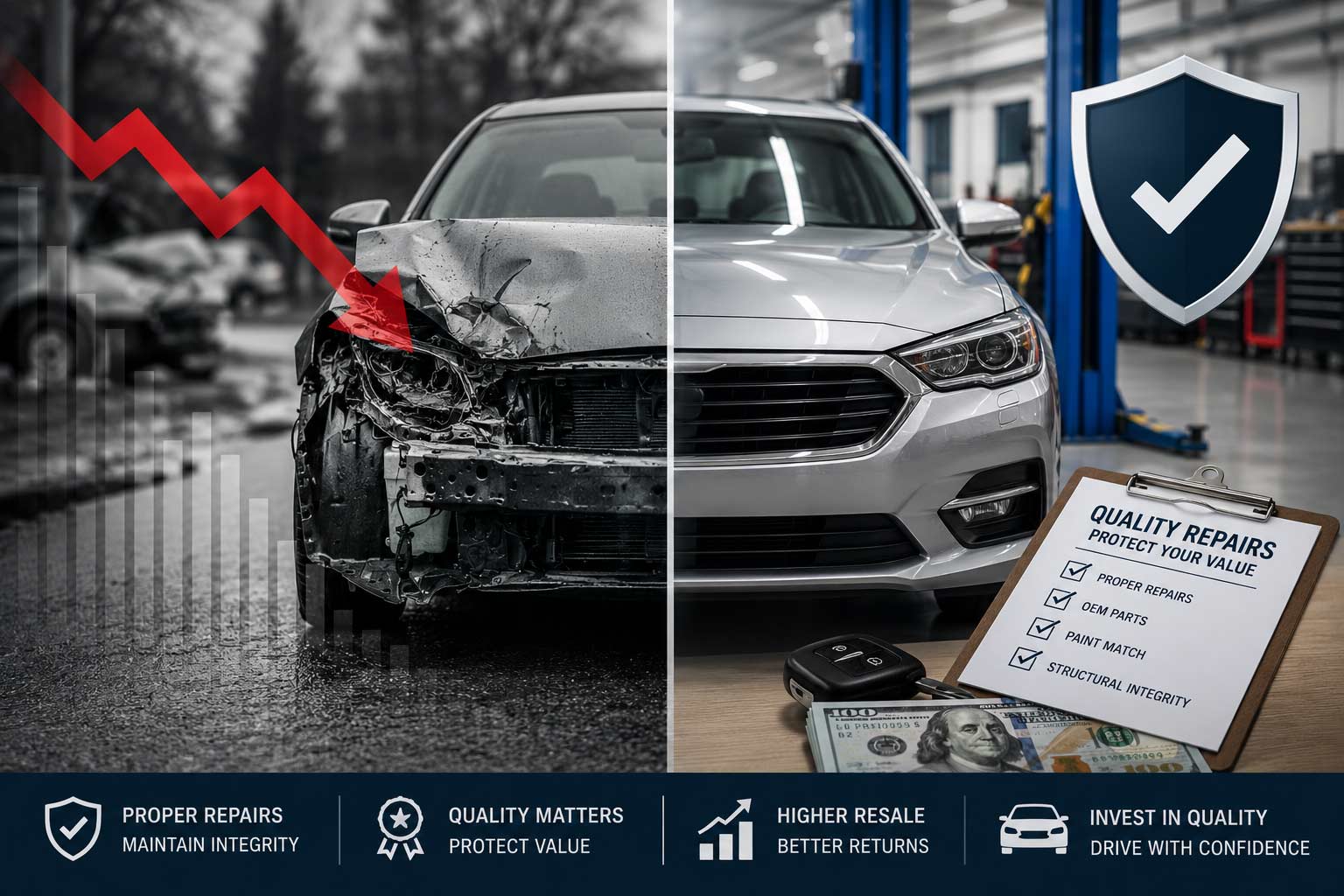
What Happens to Your Car’s Value After an Accident?
For many drivers, a vehicle is one of the largest investments they will make. So after an accident, it’s natural to wonder how much that incident will affect your car’s value. Even after high-quality repairs, the reality is that most vehicles do experience some level of depreciation following a collision.
Understanding how and why this happens can help you make smarter decisions about repairs, insurance, and future resale.
What Is Diminished Value?
Diminished value refers to the loss in a vehicle’s market value after it has been involved in an accident and repaired. Even if your car is restored to like-new condition, its history can still impact what buyers are willing to pay.
When a vehicle is involved in a collision, that information is often reported to vehicle history services. Future buyers may see the accident and assume there could be underlying issues, even if the repairs were completed properly.
How Much Value Does a Car Lose After an Accident?
The amount of value lost depends on several factors, including:
- Severity of the damage
Minor cosmetic damage typically results in less depreciation than major structural repairs. - Age and condition of the vehicle
Newer vehicles tend to lose more value after an accident compared to older vehicles. - Type of vehicle
Luxury and high-end vehicles often experience greater diminished value. - Quality of repairs
Professional repairs using proper techniques and parts can help minimize value loss.
In many cases, vehicles can lose anywhere from 10% to 30% of their pre-accident value, depending on these factors.
Why Proper Repairs Matter More Than Ever
While you cannot completely eliminate diminished value, choosing the right collision repair center can make a significant difference. Poor repairs can lead to visible imperfections, performance issues, and further loss of value.
High-quality collision repair focuses on restoring both the appearance and structural integrity of your vehicle. This includes proper frame alignment, precise paint matching, and the use of quality parts. These factors not only improve how your vehicle looks but also help maintain its long-term reliability and resale appeal.
Can You Recover Diminished Value?
In some cases, vehicle owners may be able to file a diminished value claim through the at-fault party’s insurance company. This process can vary depending on the situation and insurance coverage, but it is something worth exploring if your vehicle has suffered significant damage.
Working with a knowledgeable collision repair team can help guide you through the process and provide documentation of repairs if needed.
What Should You Do After an Accident?
If your goal is to protect your vehicle’s value as much as possible, consider the following steps:
- Choose a reputable collision repair center
- Ensure all repairs are properly documented
- Keep records of parts and service work
- Address all damage, even minor issues
- Avoid cutting corners on repair quality
These steps can help reduce the long-term financial impact of an accident.
Protecting Your Vehicle’s Long-Term Value
While an accident can affect your car’s value, the way your vehicle is repaired plays a major role in how much value is retained. By choosing experienced professionals and staying informed throughout the repair process, you can protect your investment and feel more confident about your vehicle’s future.